
Current Affairs For Examinations (CAFE) 2026
Explore the latest current affairs of 2026 with daily updates covering important developments from India and across the world. This section provides concise and reliable news on national events, international relations, economy, environment, science and technology, security, and government schemes. Carefully curated for UPSC, SSC, Banking, State PCS, and other competitive exam aspirants, these updates highlight key facts, policy changes, reports, and global developments that are frequently asked in exams. Each topic is explained in a clear and easy-to-understand format, helping readers quickly grasp the significance and exam relevance. From major government initiatives and economic reforms to environmental issues and international agreements, our current affairs coverage ensures you stay informed and exam-ready with accurate, timely, and structured information every day.
National News
1. India’s Forests May Double Carbon Storage by 2100: Environmental Research: Climate
Source: TH
Context:
The study published in Environmental Research: Climate provides a forward-looking perspective on India’s environmental landscape, suggesting that while global emissions are a threat, they may trigger a biological growth response in Indian forests.
Summary
- The Projection: India’s forest vegetation carbon stock could increase by 35% to 97% by the year 2100.
- The Paradox: Counter-intuitively, the highest carbon gains are expected under high-emission scenarios due to intensified environmental drivers.
- Key Drivers: Growth is fueled by “CO₂ Fertilization” (higher CO₂ levels boosting photosynthesis) and increased rainfall projections.
- Geographic Winners: Dry and semi-arid regions (Rajasthan, Gujarat) are projected to see the highest relative growth (over 60%).
- The Warning: Increased biomass does not necessarily mean a “safer” climate; it raises the risk of “Carbon Bombs” where stored carbon is released rapidly via wildfires or pests.
Background Concept
To understand how forests act as a “climate sponge,” it is essential to look at the biological process of carbon storage and the factors that accelerate it.
1. What is Vegetation Carbon Stock?
Carbon stock refers to the amount of carbon stored in the biomass of the forest—including trunks, branches, leaves, and roots. Through photosynthesis, trees “inhale” $CO_2$ and “lock” the carbon into their physical structure.
2. The CO₂ Fertilization Effect
Plants use $CO_2$ as a raw material for growth. When atmospheric $CO_2$ concentrations rise:
- Photosynthesis Speeds Up: Trees can grow faster and larger than in lower-CO₂ environments.
- Water-Use Efficiency: Under high $CO_2$, plants can keep their stomata (pores) partially closed, reducing water loss while still taking in enough carbon. This allows forests in dry regions to thrive more than they currently do.
3. Ecological Saturation
Why don’t the Western Ghats show the same gains? These are “climax forests” that are already densely packed. They have reached Ecological Saturation, meaning there is little physical space or additional nutrients for significant new biomass growth compared to the open, semi-arid landscapes of Western India.
Regional Growth Projections by 2100
| Region Type | Expected Carbon Gain | Primary Reason |
| Semi-Arid (West India) | >60% Increase | Increased rainfall and better water-use efficiency in desert-like conditions. |
| Central India | High/Moderate | Expanded growing seasons due to warmer, wetter weather. |
| Himalayas / Western Ghats | Limited Increase | Ecological saturation and vulnerability to temperature spikes/landslides. |
Multiple Choice Questions (MCQs)
Q1. According to the study, under which scenario would India’s forests see the highest relative increase (up to 97%) in carbon storage?
A) Low-emission scenario
B) Medium-emission scenario
C) High-emission scenario
D) Zero-emission scenario
Q2. Which biological process is primarily responsible for the “CO₂ Fertilization Effect” mentioned in the study?
A) Respiration
B) Transpiration
C) Photosynthesis
D) Decomposition
Q3. Why are biodiversity hotspots like the Western Ghats projected to show smaller carbon gains compared to semi-arid regions?
A) Because it does not rain in the Western Ghats.
B) Due to ecological saturation (already being near their maximum capacity).
C) Because they have no CO₂ in the atmosphere.
D) Because the trees there do not perform photosynthesis.
Q4. What is the projected carbon biomass rise for India’s forests by 2100 under a “Low-Emission” scenario?
A) 10%
B) 35%
C) 62%
D) 97%
Q5. In the context of climate change, what does a forest becoming a “Carbon Source” mean?
A) It is growing more trees than ever before.
B) It is releasing more $CO_2$ (via fire or decay) than it is absorbing.
C) It has run out of carbon.
D) It is being used to make coal.
Answers:
Q1: C | Q2: C | Q3: B | Q4: B | Q5: B
2. Samriddh Gram
Source: News on Air
Context:
India’s nomination for the WSIS Prizes 2026 highlights the global recognition of the Samriddh Gram model as a transformative tool for rural digital inclusion.
Summary
- The Concept: A “phygital” (physical + digital) service delivery model that uses BharatNet broadband to turn villages into socio-economic hubs.
- The Hub: Samriddhi Kendras (SK) act as one-stop centers for healthcare, education, agriculture, and governance.
- Global Recognition: Nominated for the WSIS Prizes 2026 by the International Telecommunication Union (ITU) under the “Enabling Environment” category.
- Milestone: The first official Samriddhi Kendra was recently inaugurated in Umri Village, Madhya Pradesh.
- Tech Integration: Leverages cutting-edge tech like AR/VR classrooms, IoT for farming, and ONDC for rural e-commerce.
Background Concept
To understand Samriddh Gram, it is essential to look at how it builds upon India’s existing digital public infrastructure.
1. The BharatNet Backbone
BharatNet is the world’s largest rural broadband project. Samriddh Gram acts as the “last-mile” application layer of this infrastructure. While BharatNet provides the “pipe” (fiber optics), Samriddh Gram provides the “content” (doctors, teachers, and markets).
2. The Samriddhi Kendra (SK) Model
These centers (800–1000 sq. ft.) are designed to be the “Digital Secretariat” of a village.
- Telemedicine: Uses the e-Sanjeevani platform, allowing a villager to consult a specialist in a city hospital via video link.
- Precision Farming: Employs IoT (Internet of Things) sensors. For example, a sensor in the field can trigger a smart pump to water crops only when soil moisture is low, saving electricity and water.
3. WSIS Prizes & Global ICT Goals
The World Summit on the Information Society (WSIS) is a UN-backed initiative. Winning a prize here signifies that a project is a “Global Best Practice” for achieving Sustainable Development Goals (SDGs), such as:
- SDG 3: Good Health and Well-being (via Telemedicine).
- SDG 4: Quality Education (via AR/VR classrooms).
- SDG 9: Industry, Innovation, and Infrastructure.
Key Features of Samriddh Gram
| Sector | Technology Used | Impact |
| Education | AR/VR & Smart Labs | Brings high-quality vocational training to remote students. |
| Agriculture | Drones & IoT | Provides real-time soil health data and pesticide spraying. |
| Commerce | ONDC Integration | Connects rural artisans directly to national markets. |
| Safety | CCTV & Drones | Enhances village-level security and disaster monitoring. |
Multiple Choice Questions (MCQs)
Q1. The Samriddh Gram initiative is a service delivery model designed by which department of the Government of India?
A) Department of Agriculture
B) Department of Telecommunications (DoT)
C) Department of Science and Technology
D) Ministry of Rural Development
Q2. Under which category has the Samriddh Gram initiative been nominated for the WSIS Prizes 2026?
A) E-Health
B) Enabling Environment (AL C6)
C) Cultural Diversity
D) E-Science
Q3. Which major national infrastructure project provides the high-speed broadband backbone for the Samriddh Gram initiative?
A) Sagarmala
B) Bharatmala
C) BharatNet
D) PM Gati Shakti
Q4. Where was the first official “Samriddhi Kendra” recently inaugurated?
A) Umri, Madhya Pradesh
B) Nagpur, Maharashtra
C) Ranchi, Jharkhand
D) Jodhpur, Rajasthan
Q5. In the context of Samriddh Gram, what does the term “Phygital” imply?
A) A model that is purely physical with no internet.
B) A model that exists only in the metaverse.
C) A model combining physical infrastructure (Kendras) with digital service delivery.
D) A type of high-speed satellite.
Answers:
Q1: B | Q2: B | Q3: C | Q4: A | Q5: C
3. 3D Glass Chip Packaging
Source: IE
Context:
The establishment of India’s first 3D Glass Chip Packaging facility in Bhubaneswar, Odisha, represents a leap from traditional manufacturing to “Deep Tech” semiconductor leadership.
Summary
- The Technology: Uses glass substrates (instead of silicon or organic materials) to stack chip components vertically in a 3D module.
- Key Player: Developed by US-based 3D Glass Solutions (3DGS) in Odisha.
- The Purpose: To bypass the limits of Moore’s Law by increasing power through vertical stacking (Heterogeneous Integration) rather than just shrinking transistors.
- Capacity: The plant aims for 70,000 glass panels and 50 million assembled units annually.
- Strategic Value: Unlike most plants that focus on established processes, this facility masters a novel technology critical for AI, 5G, and defense.
Background Concept
To understand 3D Glass Packaging, it is essential to look at the current “bottleneck” in the semiconductor industry.
1. The Limit of 2D Silicon
For decades, the industry followed Moore’s Law, doubling the number of transistors on a 2D chip every two years. However, we are reaching physical limits where transistors are becoming too small to function reliably.
- The Solution: If we can’t make the “floor” bigger or more crowded, we build “skyscrapers.” This is 3D Heterogeneous Integration (3DHI).
2. Why Glass over Silicon?
Traditional packaging uses silicon or organic “laminates” (plastics). Glass is emerging as the superior substrate for the AI era because:
- Rigidity: Glass doesn’t warp under high heat, which is vital when stacking multiple layers.
- Through-Glass Vias (TGV): These are tiny vertical holes that allow electrical signals to travel between layers. Glass allows for much denser and cleaner TGVs, reducing the distance data has to travel.
- Signal Integrity: Glass is an excellent insulator, meaning less “noise” and energy waste during high-speed data transfer.
3. Heterogeneous Integration
This is like a “Lego” approach to chips. Instead of building one giant, complex chip, you take small, specialized “chiplets” (one for memory, one for logic, one for 5G) and stack them on a glass substrate to work as a single unit.
Key Features of 3D Glass Packaging
| Feature | Advantage of Glass | Impact on Device |
| Thermal Stability | Handles higher temperatures without expanding. | AI processors can run at full speed without “throttling.” |
| Data Speed | Allows for ultra-dense vertical connections. | Essential for 5G and 6G low-latency communication. |
| Form Factor | Allows for thinner, more compact stacking. | Thinner smartphones and more powerful compact sensors. |
| Power Efficiency | Low signal loss due to glass properties. | Longer battery life for mobile and IoT devices. |
Multiple Choice Questions (MCQs)
Q1. What is the primary material replacing traditional silicon or organic substrates in India’s new semiconductor packaging facility in Odisha?
A) Copper
B) Glass
C) Aluminum
D) Graphene
Q2. What is the main purpose of “Through-Glass Vias” (TGVs) in 3D chip packaging?
A) To act as cooling fans.
B) To provide vertical electrical connections between stacked chip layers.
C) To store extra memory.
D) To protect the chip from sunlight.
Q3. 3D Glass Packaging is a key solution to bypass the limitations of which famous “law” in the semiconductor industry?
A) Newton’s Law
B) Moore’s Law
C) Faraday’s Law
D) Murphy’s Law
Q4. What does “Heterogeneous Integration” mean in the context of advanced semiconductor technology?
A) Making all chips out of the same material.
B) Combining different types of functional chiplets (logic, memory, sensors) into a single 3D module.
C) Making chips that only work with solar power.
D) Reducing the number of layers in a chip to one.
Q5. Which US-based firm is the lead partner for the 3D glass chip packaging facility in Bhubaneswar?
A) Intel
B) Samsung
C) 3D Glass Solutions (3DGS)
D) TSMC
Answers:
Q1: B | Q2: B | Q3: B | Q4: B | Q5: C
4. India Climbs to Global 2 in Wind Energy: Global Wind Energy Council (GWEC)
Source: BS
Context:
India’s rise to the second spot in global wind energy installations marks a significant milestone in its journey toward the 500 GW non-fossil fuel capacity target by 2030.
Summary
- Keywords: Onshore Wind, 6.3 GW Capacity, Bloomberg New Energy Finance (BNEF), Khavda Renewable Energy Park, Hybrid Power Generation, Turbine Manufacturing, Adani Wind, Global #2 Market.
- The Achievement: India commissioned a record 6.3 GW of wind energy in 2025, an 85% increase from the previous year.
- Global Ranking: India is now the world’s largest wind market outside of China, overtaking the USA and Germany.
- The Epicenter: The 30 GW Khavda Park in Gujarat is the primary driver of this surge, functioning as a massive solar-wind hybrid hub.
- Industrial Growth: Indian manufacturing is scaling globally, with Adani Wind breaking into the top 15 turbine manufacturers worldwide.
Background Concept
To understand how India achieved this surge, it is important to look at the transition from traditional onshore wind to high-capacity hybrid parks.
1. Onshore vs. Offshore Wind
Most of India’s current capacity is Onshore Wind (turbines on land). While offshore wind (turbines in the sea) has higher potential, onshore is currently more cost-effective and faster to deploy.
Offshore wind farm
2. The Hybrid Advantage
The Khavda Park uses a Solar-Wind Hybrid model.
- The Logic: Solar power peaks during the day, while wind speeds are often higher at night or during the monsoon. By combining both, the “Plant Load Factor” (efficiency) increases, providing a more stable supply to the national grid.
3. Turbine Technology Scaling
Modern turbines are becoming taller with larger blades. Larger blades allow turbines to capture “low-velocity” wind, which is crucial for states outside the high-wind zones of Tamil Nadu and Gujarat.
Key Exam Terms
- Onshore Wind: Wind energy generated from turbines located on land.
- BNEF (Bloomberg New Energy Finance): A strategic research provider that covers global commodity markets and the disruptive technologies driving the transition to a low-carbon economy.
- Khavda Renewable Energy Park: Located in the Kutch district of Gujarat, it is set to be the world’s largest renewable energy park with a 30 GW capacity.
- Hybrid Power Generation: An energy system that integrates two or more renewable energy sources (like solar and wind) to improve reliability and grid stability.
- Gigawatt (GW): A unit of power equal to one billion watts. It is the standard unit used to measure the capacity of large-scale power plants.
- Turbine Manufacturer: A company that designs and builds the wind turbines (blades, nacelles, and towers).
- Grid Stability: The ability of an electrical grid to maintain a constant voltage and frequency despite fluctuations in power supply or demand.
Multiple Choice Questions (MCQs)
Q1. According to the BNEF 2025 report, which country is the largest wind market in the world, positioned ahead of India?
A) USA
B) Germany
C) China
D) Brazil
Q2. What was the record-breaking wind energy capacity commissioned by India in 2025?
A) 1.0 GW
B) 3.5 GW
C) 6.3 GW
D) 30.0 GW
Q3. The massive 30 GW Renewable Energy Park, which is a major contributor to India’s wind energy surge, is located in which state?
A) Rajasthan
B) Tamil Nadu
C) Gujarat
D) Maharashtra
Q4. What is the primary benefit of a “Solar-Wind Hybrid” facility like the one in Khavda?
A) It makes the turbines spin faster.
B) It ensures more stable power generation by balancing day-time solar and night-time wind.
C) It reduces the height of the wind towers.
D) It eliminates the need for a connection to the national grid.
Q5. Which Indian entity was ranked 15th among global turbine makers in the 2025 report?
A) Suzlon Energy
B) Adani Wind
C) Tata Power
D) ReNew Power
Answers:
Q1: C | Q2: C | Q3: C | Q4: B | Q5: B
5. Genetically Modified (GM) Mosquitoes
Source: TH
Context:
The successful study in Tanzania represents a major breakthrough in the use of biotechnology to combat tropical diseases, proving that “biological firewalls” can be built inside insects to protect human health.
Summary
- Keywords: CRISPR-Cas9, Gene Drive, Plasmodium Parasite, Population Modification, Population Suppression, Anopheles gambiae, Antimicrobial Peptides, Mendelian Inheritance, Doublesex Gene, Midgut Activation.
- The Technology: DNA of mosquitoes is altered using CRISPR-Cas9 to make them incapable of transmitting malaria.
- The Mechanism: Employs a Gene Drive to ensure the modified trait is passed to almost all offspring, rapidly spreading through the wild population.
- The Strategy: Two main approaches—Population Modification (survival without transmission) and Population Suppression (sterility leading to collapse).
- The Precision: New models activate anti-parasite molecules only when the mosquito takes a blood meal, destroying the Plasmodium parasite in the midgut.
Background Concept
To understand why GM mosquitoes are so effective, it is necessary to look at how they break the traditional rules of inheritance.
1. Mendelian vs. Gene Drive Inheritance
In standard genetics (Mendelian), an offspring has a 50% chance of inheriting a gene from a parent. In a Gene Drive, the modified gene “copies and pastes” itself into the other chromosome.
- The Result: Nearly 100% of offspring inherit the modified gene. This allows a few hundred lab-released mosquitoes to change the genetics of an entire wild population within a few generations.
2. CRISPR-Cas9: The Molecular Scissors
CRISPR is used to “cut” the mosquito’s DNA at a precise location. Scientists then “insert” a sequence that produces antibodies to kill the malaria parasite and ensures the CRISPR machinery itself is inherited.
3. The Midgut Barrier
When a mosquito bites an infected human, the malaria parasite enters the mosquito’s midgut. Modern GM mosquitoes are engineered to release antimicrobial peptides specifically in the midgut as soon as blood is detected, neutralizing the parasite before it can migrate to the salivary glands.
Key Exam Terms
- CRISPR-Cas9: A gene-editing tool that acts like “molecular scissors” to cut and edit DNA sequences with high precision.
- Gene Drive: A technology that ensures a specific gene is inherited by nearly all offspring, allowing it to spread rapidly through a wild population.
- Plasmodium Parasite: The single-celled protozoa that causes malaria, transmitted to humans via infected female mosquitoes.
- Population Modification: Replacing a wild population with a modified one that cannot transmit the parasite, without wiping out the species.
- Population Suppression: Aiming to eliminate or drastically reduce a mosquito population, often by inducing female sterility.
- Anopheles gambiae: The primary mosquito species responsible for malaria transmission in sub-Saharan Africa.
- Antimicrobial Peptides: Proteins engineered in GM mosquitoes to kill the Plasmodium parasite during its life cycle in the insect.
- Mendelian Inheritance: The standard pattern where offspring have a 50% chance of receiving a specific gene from each parent.
- Doublesex Gene: A gene governing sexual development; targeting it can render female mosquitoes sterile.
- Midgut Activation: A “smart” mechanism where anti-parasite molecules are only produced when the mosquito ingests blood.
Multiple Choice Questions (MCQs)
Q1. Which molecular tool is primarily used to perform precision DNA editing in Genetically Modified (GM) mosquitoes?
A) Polymerase Chain Reaction (PCR)
B) CRISPR-Cas9
C) MRI Scanning
D) Infrared Spectroscopy
Q2. What is the primary purpose of a “Gene Drive” in the context of GM mosquitoes?
A) To make mosquitoes fly faster.
B) To ensure a modified gene is passed to nearly all offspring, bypassing standard 50% inheritance.
C) To allow mosquitoes to survive in colder climates.
D) To make mosquitoes glow in the dark for easier tracking.
Q3. In “Population Suppression” strategies, which of the following is typically targeted?
A) The mosquito’s ability to see at night.
B) The fertility of female offspring (e.g., doublesex gene).
C) The mosquito’s preference for fruit over blood.
D) The color of the mosquito’s wings.
Q4. Where in the mosquito’s body do modern GM molecules typically activate to destroy the malaria parasite?
A) The wings
B) The brain
C) The midgut
D) The legs
Q5. The “Plasmodium” mentioned in the context is a type of:
A) Virus
B) Bacteria
C) Parasite
D) Fungus
Answers:
Q1: B | Q2: B | Q3: B | Q4: C | Q5: C
6. India Emerges as Cradle of Jamun Evolution
Source: PIB
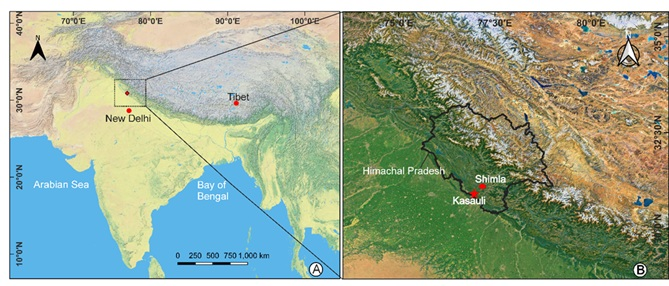
The discovery that India served as the primary evolutionary cradle for the Jamun (Syzygium) genus rewrites the botanical history of the subcontinent, shifting the center of origin from Australia to the ancient landmasses of India and East Gondwana.
Summary
- Ancient Roots: The Jamun genus (Syzygium) originated approximately 80 million years ago during the Late Cretaceous period in East Gondwana.
- India as a Cradle: Fossil evidence confirms that India was the central hub for the early diversification of the genus, rather than Australia as previously thought.
- The Kasauli Fossil: The discovery of Syzygium paleosalicifolium (fossil leaves) in the Kasauli Formation of Himachal Pradesh provides a 20-million-year-old link to modern Jamun species.
- Resilience: The genus has maintained a continuous presence in India for over 55 million years, surviving massive climatic shifts between the Paleogene and Neogene periods.
- Scientific Method: Researchers used Venation Architecture (the intricate patterns of leaf veins) to identify and classify these ancient specimens.
Background Concept
To understand how Jamun “originated” in India, one must look at the movement of the Indian plate after the breakup of the supercontinent Gondwana.
1. East Gondwana and the Indian Plate
About 180 million years ago, the supercontinent Gondwana began to break apart. India, Madagascar, Australia, and Antarctica formed “East Gondwana.” As India broke away and moved northward toward Asia, it carried a “biological cargo” of ancient plants, including the ancestors of the Jamun.
2. The “Out-of-India” Hypothesis
This study supports the “Out-of-India” theory, which suggests that many tropical plant groups evolved on the Indian plate while it was an isolated island continent. Once India collided with Asia (~50 million years ago), these plants spread across the rest of the world.
3. Venation Architecture as a “Fingerprint”
Plants are often identified by their flowers, but flowers rarely fossilize. Instead, scientists use Venation Architecture—the arrangement of veins in a leaf.
- Syzygium leaves have unique secondary veins and marginal veins that act like a botanical fingerprint. By comparing the vein patterns of 20-million-year-old fossils with modern Jamun leaves, scientists could confirm they belonged to the same family.
Key Features of the Discovery
| Feature | Details |
| Fossil Name | Syzygium paleosalicifolium |
| Location | Kasauli Formation, Himachal Pradesh |
| Age of Fossil | ~20 Million Years (Early Miocene) |
| Historical Range | Continuous presence in India since the Early Eocene (~55 mya) |
| Key Traits | Intricate venation, high adaptability to climatic shifts |
Multiple Choice Questions (MCQs)
Q1. According to recent research, approximately how many million years ago did the Jamun (Syzygium) genus originate?
A) 20 million years
B) 55 million years
C) 80 million years
D) 180 million years
Q2. The “Kasauli Breakthrough” involved the discovery of 11 well-preserved fossil leaves in which Indian state?
A) Kerala
B) Himachal Pradesh
C) Assam
D) Gujarat
Q3. Previously, the Jamun genus was theorized to have originated in which country/continent?
A) Africa
B) South America
C) Australia
D) Antarctica
Q4. What is “Venation Architecture” primarily used for by paleobotanists?
A) Measuring the height of a tree.
B) Analyzing the arrangement of veins in leaves to identify plant species.
C) Determining the sugar content of the fruit.
D) Calculating the speed of continental drift.
Q5. In which ancient landmass did the Jamun genus first appear during the Late Cretaceous period?
A) Laurasia
B) East Gondwana
C) Tethys Ocean
D) Pangea
Answers:
Q1: C | Q2: B | Q3: C | Q4: B | Q5: B
Banking and Finance News
1. UNESCAP Report
Source: TH
Context:
The latest UNESCAP report provides a realistic assessment of India’s resilience, acknowledging that while the nation remains a regional leader, it is not immune to the “energy shocks” triggered by geopolitical instability.
Summary
- Keywords: UNESCAP, GDP Projections, Consumer Price Index (CPI), West Asia Conflict, Energy Shock, Domestic Consumption, Services Sector, RBI Tolerance Band.
- The Pattern: India is expected to see a “Dip and Recovery” cycle, with growth slowing to 6.4% in FY27 before recovering to 6.6% in FY28.
- Inflation Outlook: CPI inflation is projected to surge from a low of 2.3% (FY26) to 4.4% (FY27) due to global supply disruptions.
- The Buffer: Robust domestic demand and the services sector are identified as the twin pillars protecting India from a deeper global manufacturing slump.
- Comparative Stance: UNESCAP is the most conservative forecaster (6.4%) compared to the RBI and ADB (6.9%).
Background Concept
To understand why global conflicts impact a domestic economy, we must look at the “Transmission Channels” of inflation and growth.
1. The Energy Shock Transmission
India imports nearly 85% of its crude oil requirements. When conflict occurs in West Asia (Middle East), the “Risk Premium” on oil prices rises.
- Cost-Push Inflation: Higher oil prices increase transport and production costs, which are passed on to consumers as higher prices for goods (inflation).
- Fiscal Pressure: High oil prices can widen the Current Account Deficit (CAD), putting pressure on the Rupee.
2. The RBI’s 2%–6% Tolerance Band
Under the Inflation Targeting Framework, the RBI is mandated to keep inflation at 4%, with a margin of +/- 2%.
- The Projections: Even with the “double-up” to 4.4% in FY27, India stays within the “Comfort Zone.” This suggests the RBI may not need to hike interest rates aggressively, which supports the recovery in FY28.
3. Service Sector as a Stabilizer
Unlike manufacturing, which relies on physical raw materials and global shipping (both hit by war), India’s services sector (IT, finance, consulting) is more “intangible” and resilient to supply chain blocks. This acts as a shock absorber for the GDP.
Key Exam Terms
- UNESCAP: United Nations Economic and Social Commission for Asia and the Pacific; it promotes inclusive and sustainable economic and social development in the region.
- GDP (Gross Domestic Product): The total monetary value of all finished goods and services produced within a country’s borders in a specific time period.
- CPI (Consumer Price Index): A measure that examines the weighted average of prices of a basket of consumer goods and services; it is the primary tool for measuring inflation in India.
- Fiscal Year (FY): In India, this runs from April 1 to March 31. (e.g., FY27 starts April 1, 2026).
- Headwinds: Economic conditions that slow down growth (e.g., high oil prices, war).
- Domestic Consumption: The amount of money spent by households within the country on goods and services.
- Tolerance Band: The range within which the central bank (RBI) aims to keep inflation to maintain economic stability.
Multiple Choice Questions (MCQs)
Q1. According to the UNESCAP report, what is the projected GDP growth rate for India in FY27?
A) 7.4%
B) 6.4%
C) 6.9%
D) 6.6%
Q2. What is the primary “headwind” cited by the report for the projected slowdown in India’s economy?
A) Low agricultural output
B) The West Asia conflict and energy supply disruptions
C) A sudden drop in services exports
D) High domestic interest rates
Q3. UNESCAP projects inflation to nearly double in FY27. What is the specific projected percentage?
A) 2.3%
B) 4.3%
C) 4.4%
D) 6.0%
Q4. Within which range is the RBI’s official inflation “tolerance band” currently set?
A) 1%–3%
B) 2%–6%
C) 4%–8%
D) 5%–10%
Q5. Comparing the FY27 projections, which institution has provided the most conservative (lowest) growth estimate for India?
A) World Bank
B) RBI
C) Asian Development Bank (ADB)
D) UNESCAP
Answers:
Q1: B | Q2: B | Q3: C | Q4: B | Q5: D
2. Urban co-operative Bank Licence
Source: ET
The ongoing discussion between the RBI and industry bodies highlights the delicate balance between ensuring the financial stability of grassroots institutions and promoting the expansion of formal banking services in urban areas.
Summary
- Keywords: Urban Cooperative Bank (UCB), Entry Point Norms, Unsecured Advances, Nominal Member, Tier-wise Classification, Capital Adequacy, Cooperative Societies Act.
- The Conflict: RBI proposes a ₹300 crore entry capital; the industry seeks a reduction to ₹200 crore to make the transition more feasible for credit societies.
- Lending Flexibility: Industry bodies are pushing to increase the cap on unsecured advances from 20% to 25% and extend loan tenures for nominal members.
- Regulatory Stance: The RBI remains cautious, insisting on a 10-year track record to ensure only stable and well-governed societies enter the banking sector.
- Goal: To integrate grassroots credit societies into the formal regulatory framework of the RBI while maintaining their community-centric cooperative nature.
Background Concept
Urban Cooperative Banks occupy a unique space in India’s financial system, functioning as a bridge between informal local lending and large-scale commercial banking.
1. Dual Regulation
UCBs face a unique regulatory environment. While their banking functions are regulated by the RBI (under the Banking Regulation Act, 1949), their incorporation and management are governed by the Registrar of Cooperative Societies (RCS) of the respective State or the Central Registrar for multi-state banks.
2. Tiered Classification of UCBs
To apply regulations proportionately, the RBI classifies UCBs into four tiers based on their deposits:
- Tier 1: Deposits up to ₹100 crore.
- Tier 2: Deposits between ₹100 crore and ₹1000 crore.
- Tier 3: Deposits between ₹1000 crore and ₹10,000 crore.
- Tier 4: Deposits above ₹10,000 crore.The industry is currently seeking specific relaxations for Tier-3 and Tier-4 banks to better serve their larger urban member base.
3. The Nominal Member Strategy
Unlike commercial banks where anyone can be a customer, UCBs are “member-only” institutions. Nominal Members allow the bank to provide credit for consumer goods (like a bike or a washing machine) to individuals who do not wish to be full voting members, thereby expanding the bank’s business without diluting its core cooperative governance.
Key Exam Terms
- Urban Cooperative Bank (UCB): Financial entities that are cooperatively organized and located in urban and semi-urban areas, primarily providing credit to small borrowers and businesses.
- Entry Point Norms: The minimum capital and regulatory requirements set by the RBI for the licensing of a new bank or the conversion of a society into a bank.
- Unsecured Advances: Loans provided by a bank that are not backed by any collateral (assets like land, gold, or stocks).
- Nominal Member: A person admitted to a cooperative bank for a specific purpose (like obtaining a small loan) who does not hold voting rights or a share in the bank’s management.
- Track Record: The history of a financial institution’s performance, used by regulators to assess stability, profitability, and governance quality over a period (usually 5–10 years).
- Collateral: An asset that a borrower offers to a lender as security for a loan.
- Discussion Paper: A document issued by a regulator to invite feedback from stakeholders before finalizing a new policy or rule.
Multiple Choice Questions (MCQs)
Q1. What is the minimum capital (Entry Point Norm) proposed by the RBI for the conversion of credit societies into Urban Cooperative Banks (UCBs)?
A) ₹100 crore
B) ₹200 crore
C) ₹300 crore
D) ₹500 crore
Q2. Which Tier of UCBs is the industry specifically targeting for an increase in nominal member loans to ₹5 lakh?
A) Tier-1 and Tier-2
B) Tier-3 and Tier-4
C) Only Multi-state UCBs
D) Only Rural Cooperative Banks
Q3. Under the current RBI proposal, how many years of “good financials” must a credit society demonstrate to qualify for a banking license?
A) 2 years
B) 5 years
C) 10 years
D) 15 years
Q4. Why does the RBI cap “Unsecured Advances” at a specific percentage (currently 20%) for cooperative banks?
A) To increase the bank’s profit.
B) To mitigate the risk of default since these loans have no collateral.
C) To prevent people from buying consumer durables.
D) To encourage people to join as voting members.
Q5. UCBs are primarily regulated for their “banking functions” by which of the following authorities?
A) NABARD
B) SEBI
C) Reserve Bank of India (RBI)
D) Ministry of Agriculture
Answers:
Q1: C | Q2: B | Q3: B (Part of a 10-year active track record) | Q4: B | Q5: C
3. RBI Tightens E-Mandate Rules for Recurring & Cross-Border Payments
Source: ET
Context:
The RBI’s expansion of the e-mandate framework to include cross-border transactions ensures that Indian consumers have a uniform level of protection, whether they are paying for a domestic gym membership or a global cloud subscription.
Summary
- Keywords: Additional Factor Authentication (AFA), Cross-Border Payments, Automatic Debit, Standard Transaction Limit, Special Category Limit, 24-Hour Notification, Pre-Debit Alert, PPI (Prepaid Instruments).
- The Goal: To reduce “subscription fatigue” and digital fraud by giving users mandatory AFA control over setting up, modifying, or canceling recurring payments.
- Cross-Border Inclusion: The framework now covers international recurring payments made via cards, UPI, and wallets.
- Safety Net: A mandatory 24-hour pre-debit notification allows users to cancel a specific transaction before it happens.
- Thresholds: Payments up to ₹15,000 (standard) and ₹1 lakh (special categories) are exempt from OTP for every debit, provided the mandate was set up with AFA.
Background Concept
An e-mandate is essentially a digital “standing instruction.” Understanding how it works is vital for regulatory exams, as it involves the intersection of convenience and cybersecurity.
1. The Setup (AFA Requirement)
When you first subscribe to a service, you must perform Additional Factor Authentication (AFA). This is a security layer beyond your card details (like an OTP). Once this “Master Approval” is given, the bank remembers the instruction.
2. The 24-Hour Pre-Debit Alert
To prevent surprise deductions, the RBI mandates a notification at least 24 hours before the debit. This gives the customer a “cooling-off period” to review the amount and merchant. If the user finds the amount incorrect, they can opt out immediately.
3. Exemption Limits (The “Trust” Threshold)
The RBI knows that requiring an OTP for every small monthly payment (like a ₹200 phone bill) is annoying. Therefore, it allows “Auto-Debit” without a new OTP if:
- Standard: The amount is $\le$ ₹15,000.
- High-Value (Low Risk): The amount is $\le$ ₹1 lakh for specific low-risk payments like Insurance, Mutual Funds (SIPs), and Credit Card bills.
Key Exam Terms
- Additional Factor Authentication (AFA): A security process where a user is granted access only after successfully presenting two or more pieces of evidence (e.g., Password + OTP).
- E-Mandate: A digital instruction given by a customer to their bank, authorizing a merchant to collect recurring payments from their account automatically.
- Cross-Border Payment: Any financial transaction where the payer and the recipient are based in different countries.
- Pre-Debit Notification: A mandatory message (SMS/Email) sent by the bank to the customer 24 hours before a recurring payment is deducted.
- PPI (Prepaid Payment Instruments): Methods that facilitate the purchase of goods and services against the value stored on them (e.g., Wallets, Smart Cards).
- Subscription Trap: A situation where a consumer is charged repeatedly for a service they no longer use because the cancellation process is too difficult.
- FASTag / NCMC: These are excluded from the 24-hour rule because they are “convenience-first” transit and toll payment systems that require immediate replenishment.
Multiple Choice Questions (MCQs)
Q1. What is the standard transaction limit below which a recurring e-mandate payment does not require a fresh OTP for every debit?
A) ₹2,000
B) ₹5,000
C) ₹15,000
D) ₹1,00,000
Q2. According to the revised RBI rules, how many hours before a recurring debit must a bank send a notification to the customer?
A) 2 hours
B) 12 hours
C) 24 hours
D) 48 hours
Q3. For which of the following categories is the AFA-exempt limit for recurring payments set at ₹1 lakh?
A) Online shopping at international websites
B) OTT subscriptions (like Netflix or Prime)
C) Insurance premiums and Mutual Fund SIPs
D) Food delivery app subscriptions
Q4. Which of the following is EXEMPT from the mandatory 24-hour pre-debit notification rule?
A) Monthly gym membership
B) Auto-replenishing FASTag balances
C) International cloud storage fees
D) Annual magazine subscriptions
Q5. In the context of e-mandates, what does “AFA” stand for?
A) Automated Fund Allocation
B) Additional Factor Authentication
C) Account Fund Access
D) Authorized Financial Advisor
Answers:
Q1: C | Q2: C | Q3: C | Q4: B | Q5: B
One Liner Current Affairs
April 22, 2026
| S. No. | Topic/Event | Key Highlights |
|---|---|---|
| 1 | State Bank of India Growth Target | Aims balance sheet at 25% of India’s GDP by 2030; current size ₹71.62 lakh crore with expansion strategy. |
| 2 | Cabinet Approvals | Narendra Modi-led Cabinet approved 2% DA hike (60%), ₹24,815 crore railway projects, and RELIEF scheme expansion. |
| 3 | DRDO ‘Prajna’ System | AI-based satellite imaging system enhances real-time surveillance and internal security operations. |
| 4 | Petroglyph Conservation Park | India’s first park to be developed in Leh with Archaeological Survey of India to preserve ancient rock art. |
| 5 | Odisha Semiconductor Unit | India’s first 3D glass chip packaging unit to be set up in Bhubaneswar with ₹1,943 crore investment. |
| 6 | C-DOT MoU | Partnered with Jumps Automation LLP for AI-based cybersecurity awareness platform. |
| 7 | Ministry of Minority Affairs–IIT Patna MoU | Under PM VIKAS, aims to train 600 minority youth in AI and analytics skills. |
| 8 | UN ESCAP Report | Projects India’s GDP growth at 6.4% (2026) and 6.6% (2027); inflation stable around 4.4%. |
| 9 | National Health Authority Event | Concluded Chintan Shivir 2026; reviewed AB PM-JAY & ABDM and awarded best-performing states. |
| 10 | Joginapally Santosh Kumar Award | Honoured as ‘Global Green Icon’ in London for Green India Challenge initiative. |
| 11 | Apple Inc. Leadership Change | John Ternus to become CEO in Sept 2026, succeeding Tim Cook. |
| 12 | Indian Navy Vessel Launch | Fourth Diving Support Craft DSC A23 launched by Titagarh; boosts deep-sea rescue capability. |
| 13 | Aronyak Ghosh Achievement | Became India’s 95th Chess Grandmaster at Bangkok Chess Club Open 2026. |
| 14 | World Liver Day | Theme 2026: “Solid Habits, Strong Liver”; promotes preventive healthcare. |
| 15 | UN Chinese Language Day | Promotes multilingualism; linked to traditional ‘Guyu’ festival. |
| 16 | National Civil Services Day | Theme 2026: “Viksit Bharat: Citizen-Centric Governance”; honours civil servants. |
