Iran–Israel War: Causes, Geopolitical Impact, Strait of Hormuz Crisis & Global Implications
Introduction
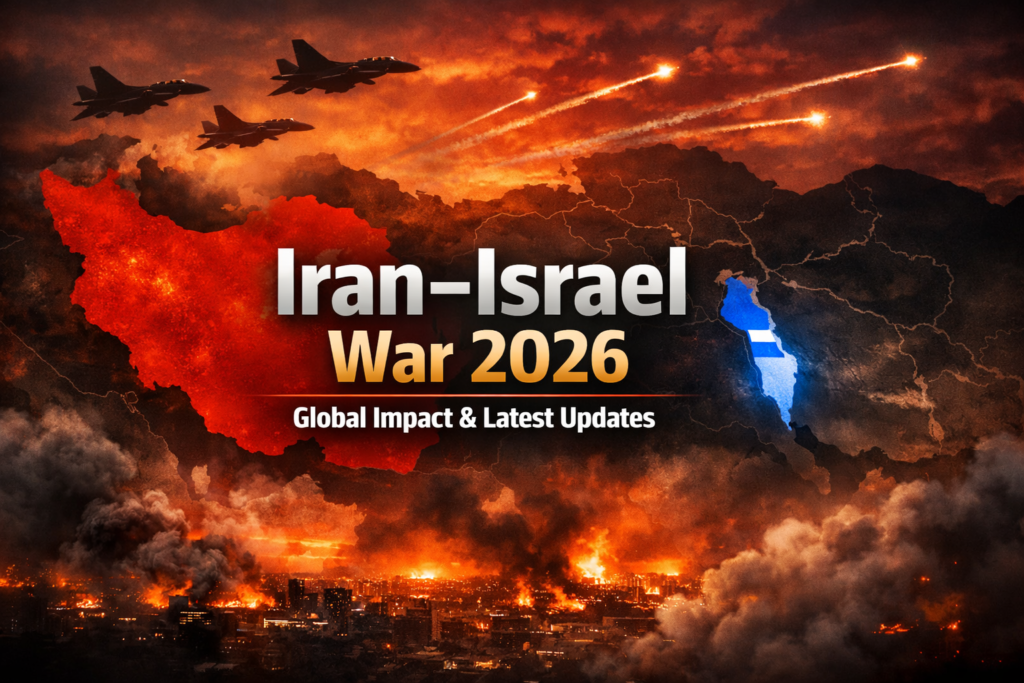
The latest escalation in the Iran–Israel conflict has intensified regional instability in West Asia. Under “Operation Rising Lion,” Israel launched airstrikes and drone attacks targeting Iran’s nuclear and military facilities, including Tehran, the Natanz uranium enrichment site, a nuclear research centre, military bases in Tabriz, and an underground missile storage facility in Kermanshah.
In retaliation, Iran initiated “Operation True Promise 3,” launching waves of ballistic missiles toward Jerusalem and Tel Aviv. The escalation reflects deep-rooted hostility, nuclear anxieties, and geopolitical rivalry in the region.
Reasons Behind the Iran–Israel Conflict
Historical Roots
The hostility dates back to the 1979 Iranian Revolution, which transformed Iran from a strategic partner of Israel under the Shah into an Islamic Republic openly opposed to the Jewish state. Since then, diplomatic ties have remained severed, and tensions have steadily intensified.
Religious and Ideological Divide
Iran’s Shia Islamic governance framework contrasts with Israel’s identity as a Jewish-majority state. These ideological differences have entrenched mistrust and shaped adversarial foreign policies on both sides.
Iran’s Support for Anti-Israel Groups
Iran has consistently supported Palestinian causes and armed groups such as Hezbollah and Hamas, both viewed by Israel as major security threats.
The rivalry manifests through proxy conflicts across Lebanon, Syria, Iraq, and Yemen. Iran’s backing of the Assad regime in Syria and the Houthi rebels in Yemen further intensifies regional competition.
Geopolitical Rivalry
Iran and Israel compete for regional dominance in West Asia. Their opposing interests in the Syrian civil war and the Yemen crisis reflect a broader struggle for influence.
Iran’s Nuclear Ambitions
Israel considers Iran’s nuclear programme a grave threat, fearing the possibility of nuclear weapon development.
The Joint Comprehensive Plan of Action (JCPOA) aimed to restrict Iran’s nuclear activities in exchange for sanctions relief. However, persistent disagreements and withdrawals weakened the agreement, increasing tensions and triggering covert as well as overt disruptions of Iran’s nuclear facilities.
Implications of the Conflict on India
Energy Security Concerns
India imports nearly 2 million barrels of oil daily through the Strait of Hormuz, a critical maritime chokepoint. Any disruption could lead to:
- Supply shortages
- Rising fuel prices
- Inflationary pressure
- Fiscal strain and slower economic growth
Oil price volatility also affects stock markets, currency stability, and investor sentiment.
Impact on Indian Diaspora
More than 66% of India’s 1.34 crore NRIs reside in the Middle East, particularly in the UAE, Saudi Arabia, Kuwait, Qatar, Oman, and Bahrain. Escalation increases risks to:
- Safety of Indian nationals
- Remittance flows
- Evacuation logistics
India has previously conducted large-scale evacuations during crises such as the 1990–91 Gulf War and conflicts in Libya and Ukraine.
Disruption to Strategic Connectivity
Chabahar Port
Chabahar Port
Chabahar is vital for India’s connectivity to Afghanistan and Central Asia. Regional instability may delay infrastructure expansion and trade flows.
IMEC Corridor
India-Middle East-Europe Economic Corridor
The IMEC seeks to enhance trade connectivity between India, West Asia, and Europe. Conflict risks delaying investments and increasing shipping costs.
Shipping disruptions in the Red Sea and adjacent waters further threaten global trade routes and logistics networks.
Diplomatic Tightrope for India
India maintains strong defence, technology, and innovation ties with Israel while preserving energy and connectivity partnerships with Iran and Gulf countries.
Escalation complicates this diplomatic balance, as India seeks to avoid alignment with either side while protecting strategic interests.
Possible Measures to De-escalate the Conflict
Two-State Solution
Progress toward a Two-State Solution—an independent Palestinian state alongside Israel—remains central to long-term regional stability. Sustainable ceasefire efforts and humanitarian access in Gaza are essential steps.
Dialogue and Multilateral Diplomacy
Neutral mediators such as the European Union and the United Nations can facilitate direct engagement, confidence-building measures, and structured negotiations.
Tackling Nuclear Proliferation
Recommitment to the JCPOA and international inspections could restore transparency. In parallel, assurances against military strikes on nuclear facilities may reduce escalation risks.
Strengthening Regional Cooperation
Forums such as the Gulf Cooperation Council can promote dialogue, collective security frameworks, and crisis management mechanisms.
Conclusion
The Iran–Israel conflict, rooted in historical hostility, ideological divergence, and nuclear tensions, poses serious risks to regional stability and global energy security. For India, the crisis affects energy imports, diaspora safety, strategic connectivity projects like Chabahar and IMEC, and diplomatic balancing in West Asia.
Sustained diplomacy, nuclear transparency, humanitarian initiatives, and regional cooperation remain essential to prevent prolonged instability and safeguard broader geopolitical equilibrium.
