Iran–US–Israel War 2026: Causes, Latest Developments, Global Impact & What Happens Next
Introduction: What is the Iran–US–Israel War 2026?
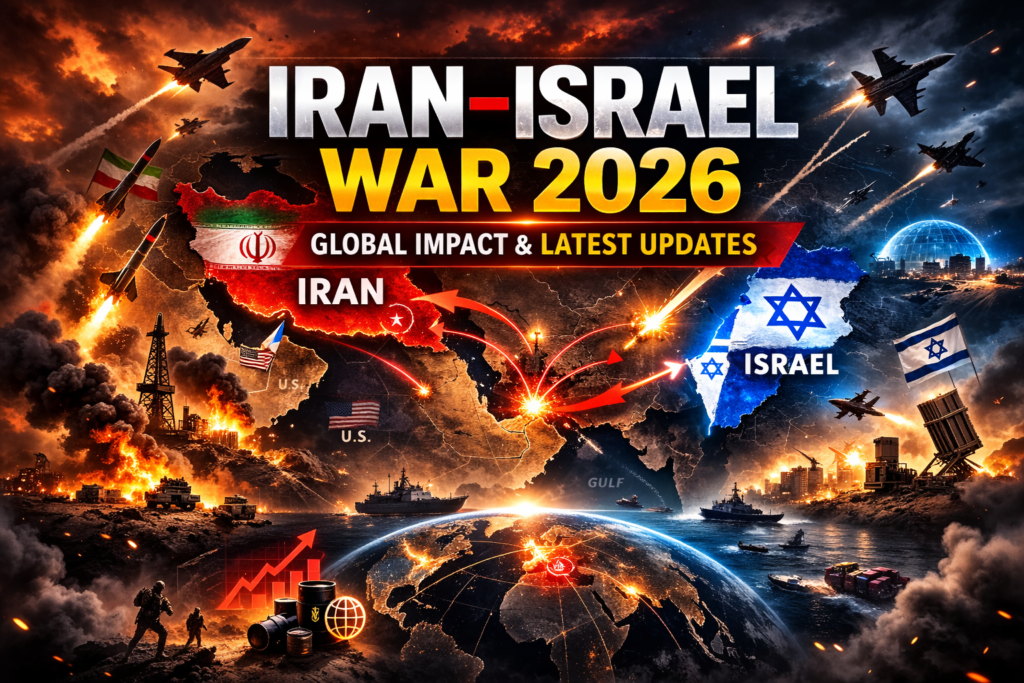
The Iran–US–Israel War 2026 marks one of the most significant geopolitical escalations in the Middle East in recent years. Beginning with coordinated U.S.–Israeli airstrikes on 28 February 2026 targeting Iranian military and nuclear infrastructure, the conflict rapidly expanded across the Gulf region, drawing global attention and raising concerns over energy security, international law, and regional stability.
Causes of the Iran–US–Israel War 2026
1. Long-Term Structural Causes
- Nuclear Dispute: Disagreements over Iran’s nuclear program after the collapse of the Joint Comprehensive Plan of Action (JCPOA).
- Proxy Conflicts: Iran’s support for non-state actors such as Hezbollah and armed groups in Syria, Iraq, and Yemen.
- Strategic Rivalry: Israel’s long-standing position that a nuclear-capable Iran poses an existential threat.
- US–Iran Hostility: Decades of sanctions, diplomatic breakdowns, and military tensions.
2. Immediate Triggers (2025–2026 Escalation)
- June 2025 “Twelve-Day War”: Israeli strikes on Iranian nuclear and missile sites followed by Iranian ballistic missile retaliation.
- February 28, 2026 Joint Strikes: Coordinated US–Israeli air campaign targeting Tehran and other high-value military installations.
- Leadership Targeting: Reported killing of senior Iranian leadership escalated tensions dramatically.
Timeline of Major Events
Pre-2025
- Covert operations, cyberattacks, and limited cross-border strikes between Israel and Iranian proxies.
13–24 June 2025
- “Twelve-Day War”: Major Israeli offensive on Iranian facilities.
- Iranian ballistic missile response targeting Israeli assets.
Late 2025
- Diplomatic backchannel efforts fail.
- Rising tensions in the Gulf and Red Sea shipping routes.
28 February 2026
- Joint US–Israel airstrikes on Iranian military and nuclear sites.
- Beginning of full-scale regional escalation.
March 2026 Onwards
- Iranian missile and drone attacks on US bases and Israeli targets.
- Increased maritime disruptions in the Gulf.
- Emergency United Nations Security Council meetings.
Strategic Objectives of Key Actors
Israel
- Neutralize Iran’s nuclear and missile capabilities.
- Restore strategic deterrence.
- Reported aim of weakening or destabilizing Iranian leadership.
United States
- Protect US military assets and regional allies.
- Eliminate perceived imminent threats.
- Maintain dominance in Gulf security architecture.
Iran
- Preserve regime survival.
- Deter further Western and Israeli attacks.
- Raise costs through missile strikes and proxy warfare.
Military Developments in the 2026 Conflict
- Precision Airstrikes: Targeted nuclear facilities, missile storage sites, and command centers.
- Ballistic Missile Retaliation: Iran launched long-range missile and drone attacks.
- Proxy Involvement: Hezbollah and allied militias opened additional fronts.
- Cyber Warfare: Reported cyber disruptions targeting infrastructure.
Global Consequences of the Iran–US–Israel War 2026
1. Energy Security Crisis
- Disruptions in the Strait of Hormuz.
- Increase in global oil prices.
- Higher maritime insurance costs.
2. Regional Instability
- Civilian displacement.
- Increased sectarian tensions.
- Risk of prolonged regional conflict.
3. Diplomatic Fallout
- Divisions among Western allies.
- Russia and China criticized US–Israel actions.
- Multiple UN Security Council emergency sessions.
Legal and International Law Issues
- Pre-emptive Self-Defense Debate: Whether strikes qualify under Article 51 of the UN Charter.
- Targeted Killing of Leaders: Raises questions about sovereignty and international norms.
- Use of Force: Debates on proportionality and necessity.
Implications for India
1. Energy Security
India depends significantly on Gulf oil imports. Disruption increases fuel prices and inflationary pressure.
2. Strategic Balancing
India maintains strong ties with:
- United States (defense cooperation)
- Israel (technology and defense)
- Iran (Chabahar Port, connectivity)
Diplomatic neutrality becomes crucial.
3. Indian Diaspora Safety
Large Indian population in Gulf countries requires evacuation planning and crisis diplomacy.
Conclusion
The Iran–US–Israel War 2026 represents a major turning point in Middle Eastern geopolitics. It highlights the dangers of escalation in a multipolar world, the fragility of nuclear diplomacy, and the strategic importance of energy corridors. For examination purposes, understanding its causes, timeline, strategic dimensions, and global implications is essential for writing structured, analytical, and high-scoring answers.
