Current Affairs For Examinations (CAFE): 1 April 2026
April 1, 2026
Explore the latest current affairs of 2026 with daily updates covering important developments from India and across the world. This section provides concise and reliable news on national events, international relations, economy, environment, science and technology, security, and government schemes. Carefully curated for UPSC, SSC, Banking, State PCS, and other competitive exam aspirants, these updates highlight key facts, policy changes, reports, and global developments that are frequently asked in exams. Each topic is explained in a clear and easy-to-understand format, helping readers quickly grasp the significance and exam relevance. From major government initiatives and economic reforms to environmental issues and international agreements, our current affairs coverage ensures you stay informed and exam-ready with accurate, timely, and structured information every day.
International Affairs
1. The WTO’s 14th Ministerial Conference (MC14)
Summary
- Host: Yaoundé, Cameroon (2nd time in Africa).
- Key Concept: The Yaoundé Package (Draft texts for future finalization).
- Unresolved Issues: E-commerce moratorium, TRIPS non-violation complaints, Agriculture, and Appellate Body reform.
- New Body: Integrated Forum on Climate Change and Trade (IFCCT).
- India’s Stance: Blocked the Investment Facilitation for Development (IFD) agreement.
Context:
The WTO’s 14th Ministerial Conference (MC14), held in Yaoundé, Cameroon, in 2026, concluded with a mix of incremental progress and significant deadlocks on core global trade issues. While the “Yaoundé Package” preserved the framework for future negotiations, the failure to reach a consensus on the e-commerce moratorium and dispute settlement reform highlights the deep divisions between developed and developing nations.
WTO MC14 Conference
The Ministerial Conference is the highest decision-making body of the World Trade Organization (WTO). MC14 was a historic event as it was only the second time the conference was hosted in Africa, emphasizing the growing influence of the “Global South” in multilateral trade negotiations.
Key Outcomes: The “Yaoundé Package”
Despite the lack of a final overarching declaration, members developed a collection of draft texts known as the Yaoundé Package. These documents serve as a bridge to prevent the total collapse of talks and will be finalized at the General Council in Geneva.
- Fisheries Subsidies: Members agreed to continue negotiations with the goal of delivering final recommendations by MC15. The focus remains on eliminating subsidies that contribute to overcapacity and overfishing.
- Trade and Climate Agenda: In a significant step forward, a communiqué was adopted regarding fossil fuel subsidy reform. The conference also saw progress on the Integrated Forum on Climate Change and Trade (IFCCT), which is set to launch a three-year work programme in June 2026.
- Support for Small Economies & LDCs: Specific measures were adopted to improve the integration of Least Developed Countries (LDCs) and small economies into the global trading system, focusing on “Special and Differential Treatment” (S&DT).
Major Failures and Deadlocks
The conference was defined by a “North-South” divide on several critical pillars of the digital and agricultural economy.
- E-commerce Moratorium Deadlock: One of the biggest failures was the inability to extend the moratorium on customs duties for digital transmissions. A major clash occurred between the USA (advocating for a permanent extension) and Brazil, leading to a stalemate that threatens to disrupt global digital trade.
- TRIPS Moratorium Lapse: No consensus was reached on the “non-violation” complaint moratorium under the TRIPS Agreement, which is now expected to expire by the end of March 2026.
- Investment Facilitation (IFD): A proposal for an Investment Facilitation for Development agreement was successfully blocked by India and South Africa, who argued that such issues fall outside the WTO’s traditional trade mandate.
- Dispute Settlement Crisis: The WTO’s Appellate Body remains paralyzed. Despite intense discussions, there was no convergence on a reform system to restore the two-tier dispute settlement mechanism.
The Role of India and Developing Nations
India, alongside South Africa and Brazil, played a pivotal role in ensuring that the interests of developing nations were not sidelined by “plurilateral” (small group) agreements favored by developed countries.
- Mandate Protection: India’s stance against the IFD agreement was based on preserving the “Member-driven” nature of the WTO, insisting that new issues should only be included through full consensus.
- Agriculture Impasse: Disputes over domestic support and public stockholding for food security (essential for India) remained unresolved due to opposition from major exporters like the US and Brazil.
Way Ahead: The Road to Geneva and MC15
The “new WTO way of working,” as described by Director-General Ngozi Okonjo-Iweala, focuses on nimbleness, but the following hurdles remain:
- Resolving the Deadlines: Urgent action is needed in Geneva to address the expiring e-commerce and TRIPS moratoriums before they trigger trade chaos.
- Bridging the US-Brazil-India Gap: High-level diplomatic engagement is required to find a middle ground on agriculture and digital trade rules.
- Finalizing the Yaoundé Package: The draft texts must be converted into legally binding decisions at the General Council level.
Examination Focused MCQs
Q1. Where was the 14th Ministerial Conference (MC14) of the World Trade Organization held?
A) Geneva, Switzerland
B) Abu Dhabi, UAE
C) Yaoundé, Cameroon
D) Nairobi, Kenya
Q2. What is the “Yaoundé Package” referred to in the context of WTO MC14?
A) A final, legally binding treaty on e-commerce duties.
B) A collection of draft texts and declarations to be finalized in Geneva.
C) A specialized trade agreement exclusively for African nations.
D) A plan to dismantle the WTO’s dispute settlement system.
Q3. Which two countries successfully blocked the inclusion of the “Investment Facilitation for Development (IFD)” agreement at MC14?
A) USA and China
B) Brazil and Russia
C) India and South Africa
D) Germany and France
Q4. Consider the following statements regarding the outcomes of WTO MC14:
- A permanent extension was granted to the moratorium on e-commerce customs duties.
- The conference reaffirmed a commitment to fossil fuel subsidy reform through the trade-climate interface.
Which of the statements given above is/are correct?
A) 1 only B) 2 only C) Both 1 and 2 D) Neither 1 nor 2
Q5. The “Integrated Forum on Climate Change and Trade (IFCCT)” is scheduled to launch its three-year work programme in which month and year?
A) January 2025
B) June 2026
C) December 2027
D) March 2028
2. The Bab el-Mandab Strait
Context:
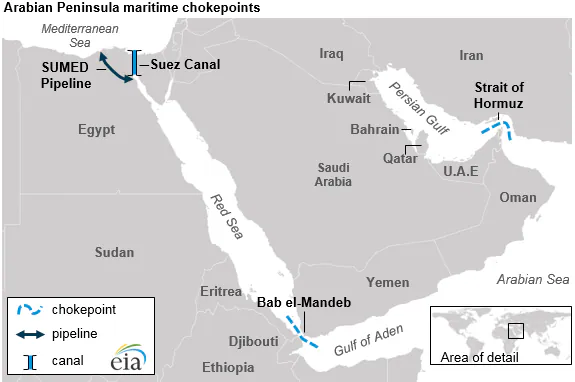
The Bab el-Mandab Strait, historically known as the “Gate of Tears” (Bab al-Mandab in Arabic), has once again become the focal point of global geopolitical tension. As a narrow maritime chokepoint, it acts as the southern sentry to the Red Sea, and any disruption here sends immediate shockwaves through the global energy and commodity markets.
Geography and Strategic Location
The strait is a narrow passage that separates the African continent from the Arabian Peninsula. Its geography makes it one of the most easily blockaded maritime routes in the world.
- Flanking Regions: It is bordered by Djibouti and Eritrea to the southwest (Horn of Africa) and Yemen to the northeast (Arabian Peninsula).
- Connecting Waters: It serves as the critical link between the Red Sea and the Gulf of Aden, which leads into the broader Arabian Sea and Indian Ocean.
- The Divide: The strait is split into two channels by Perim Island (also known as Mayyun). The western channel is the deeper, primary route used by large commercial vessels.
Why It Is a “Global Chokepoint”
A “chokepoint” is a narrow geographical feature that, if closed or threatened, can halt global trade. The Bab el-Mandab is arguably the most sensitive after the Strait of Hormuz.
- The Suez Link: It is the mandatory gateway for any ship traveling from the Indian Ocean to Europe via the Suez Canal.
- Energy Lifeline: Approximately 10% to 12% of global seaborne oil and millions of barrels of crude pass through this 29-km wide gap daily.
- LNG Passage: Over 30 million tonnes of Liquefied Natural Gas (LNG) pass through the strait annually, making it vital for European heating and industrial needs.
The Impact of Closure: The “Cape Route”
When the Bab el-Mandab becomes unsafe due to missile attacks or piracy, shipping companies are forced to take the “long way around” Africa.
- Alternative: Ships must sail around the Cape of Good Hope (South Africa).
- The Cost of Delay: This diversion adds roughly 4,000 to 6,000 nautical miles to a journey between Asia and Europe.
- Time Factor: It increases travel time by 14 to 20 days, leading to higher fuel costs, increased insurance premiums, and global supply chain delays.
[Image comparing the shipping route through the Suez Canal vs the route around the Cape of Good Hope]
Origin of the Name: “Gate of Tears”
The name Bab el-Mandab carries a grim historical weight.
- Geological Legend: Some believe it refers to the massive loss of life during an ancient earthquake that tore Africa and Asia apart, creating the strait.
- Navigational Danger: Others attribute it to the “tears” of sailors who perished navigating its narrow, rocky, and treacherous currents, which were historically difficult for sailing vessels to master.
Examination Focused MCQs
Q1. The Bab el-Mandab Strait connects which of the following water bodies?
A) Persian Gulf and Gulf of Oman
B) Red Sea and Gulf of Aden
C) Mediterranean Sea and Red Sea
D) Black Sea and Sea of Marmara
Q2. Which island strategically divides the Bab el-Mandab Strait into two channels?
A) Socotra Island
B) Perim Island
) Lakshadweep Island
D) Zanzibar Island
Q3. If the Bab el-Mandab Strait is closed, ships traveling from the Indian Ocean to Europe must divert around which geographical feature?
A) Cape Horn
B) Cape of Good Hope
C) Strait of Gibraltar
D) Panama Canal
Q4. Consider the following statements regarding the Bab el-Mandab Strait:
- It is bordered by Yemen to the northeast and Djibouti/Eritrea to the southwest.
- It is wider than the Strait of Malacca, measuring over 500 km at its narrowest point.
Which of the statements given above is/are correct?
A) 1 only B) 2 only C) Both 1 and 2 D) Neither 1 nor 2
Q5. Approximately what percentage of global seaborne oil passes through the Bab el-Mandab Strait?
A) 2% to 3%
B) 10% to 12%
C) 40% to 50%
D) 75% to 80%
National Affairs
1. The Energy Statistics India 2026 Report
Source: PIB
Summary
- Released By: NSO, Ministry of Statistics and Programme Implementation (MoSPI).
- Report Edition: 33rd Annual Edition (2026).
- Solar Potential Share: 71% of total RE.
- T&D Loss Target: Reduced to 17% (from 22%).
- Primary Fuel: Coal (5.52 lakh KTOE).
- Credit Flow Growth: 6x increase from 2021 to 2025.
Context:
The Energy Statistics India 2026 report, the 33rd edition released by the National Statistical Office (NSO), provides a data-driven look at India’s evolving energy landscape. As of March 2026, the report highlights a significant pivot toward solar energy and improved grid efficiency, even as the nation grapples with a persistent “coal-heavy” energy mix.
Primary Energy Supply and Consumption Trends
The report indicates a steady climb in India’s total energy appetite, reflecting the country’s industrial and residential expansion.
- Total Primary Energy Supply (TPES): Reached 9,32,816 KTOE (Kilotonne of Oil Equivalent) in FY 2024-25, growing by nearly 3% annually.
- Per-Capita Consumption: Individual energy use has jumped from 15,296 MJ in 2015-16 to 18,096 MJ in 2024-25, a clear indicator of rising living standards and urbanization.
- Total Final Consumption (TFC): Since 2015-16, the final consumption has surged by 30.41%, putting immense pressure on supply chains and import requirements.
The Renewable Energy (RE) Revolution
The most striking data point in the 2026 report is the exponential leap in India’s green energy potential.
- Staggering Potential: India’s total RE potential is now estimated at 47.04 lakh MW.
- Solar Dominance: Solar energy accounts for 71% of this potential (approx. 33.43 lakh MW).
- Geographical Concentration: A “Big Six” state cluster (Rajasthan, Maharashtra, Gujarat, Andhra Pradesh, Karnataka, and Madhya Pradesh) holds over 70% of India’s total renewable potential.
- Growth Rate: Installed RE capacity has maintained a healthy CAGR of 10.93% over the last decade.
Operational Efficiency and Financial Growth
India is not just producing more energy; it is becoming better at moving it.
- Reducing “Leaky” Grids: Transmission and Distribution (T&D) losses have seen a vital reduction—falling from 22% in 2015-16 to 17% in 2024-25. While still higher than global benchmarks, the 5% gain represents massive energy savings.
- Investment Surge: Credit flow to the energy sector has witnessed a sixfold increase since 2021, reaching ₹10,325 crore in 2025. This reflects high investor confidence, particularly in green infrastructure.
The “Coal Paradox” and Strategic Challenges
Despite the green push, the report reveals that India’s transition to Net Zero faces a “Coal Reality.”
- Dependency: Coal remains the primary energy source, with its supply increasing to 5,52,315 KTOE.
- Import Reliance: Supply trends for Crude Oil and Natural Gas continue to rise, indicating that India remains highly sensitive to global price shocks and geopolitical instability in energy-exporting regions.
- Regional Imbalance: The concentration of RE potential in just six states creates a risk of regional energy disparities and necessitates a robust “Green Energy Corridor” for inter-state transmission.
Examination Focused MCQs
Q1. According to the Energy Statistics India 2026 report, which state-wise trend was observed regarding Renewable Energy (RE) potential?
A) RE potential is evenly distributed across all 28 states.
B) Over 70% of RE potential is concentrated in six specific states.
C) Eastern India holds the highest share of solar potential.
D) RE potential has decreased by 10% since 2015.
Q2. Which energy source holds the highest share (approximately 71%) in India’s total renewable energy potential as of March 2025?
A) Wind Energy
B) Biomass
C) Solar Energy
D) Small Hydro Power
Q3. What has been the trend in Transmission and Distribution (T&D) losses in India between FY 2015-16 and FY 2024-25?
A) Losses increased from 17% to 22%.
B) Losses remained stagnant at 20%.
C) Losses were reduced from 22% to 17%.
D) T&D losses were completely eliminated in 2025.
Q4. Consider the following statements regarding the Energy Statistics India 2026 report:
- Coal supply has decreased significantly as India reached its Net Zero targets in 2025.
- Per-capita energy consumption in India has risen to 18,096 MJ in 2024-25.
Which of the statements given above is/are correct?
A) 1 only B) 2 only C) Both 1 and 2 D) Neither 1 nor 2
Q5. The “Energy Statistics India” report is published annually by which organization?
A) NITI Aayog
B) Bureau of Energy Efficiency (BEE)
C) National Statistics Office (NSO)
D) Central Electricity Authority (CEA)
2. The IONS Maritime Exercise (IMEX) Table-Top Exercise (TTX) 2026
Source: TOI
Summary
- Venue: Maritime Warfare Centre, Kochi (Southern Naval Command).
- Format: Table-Top Exercise (Simulated/War-gaming).
- Parent Organization: Indian Ocean Naval Symposium (IONS).
- India’s Vision: SAGAR (Security and Growth for All in the Region).
- Key Focus: Non-traditional maritime threats and regional interoperability.
Context:
The IONS Maritime Exercise (IMEX) Table-Top Exercise (TTX) 2026 represents a critical pillar of India’s maritime diplomacy. Hosted by the Indian Navy at the Southern Naval Command in Kochi, this exercise serves as a strategic laboratory for naval commanders across the Indian Ocean to synchronize their responses to crises without the logistical overhead of live fleet deployments.
Understanding IMEX TTX 2026
A Table-Top Exercise (TTX) is a simulated, discussion-based session where personnel meet in a specialized environment—in this case, the Maritime Warfare Centre—to discuss their roles during an emergency and their responses to a particular situation.
- The Framework: Conducted under IONS, a voluntary initiative that seeks to increase maritime cooperation among the littoral states of the Indian Ocean Region (IOR).
- The Focus: Primarily targets Non-Traditional Security (NTS) threats. Unlike traditional warfare, NTS threats include piracy, human trafficking, climate-induced disasters, and maritime terrorism.
Strategic Objectives and Participation
The 2026 edition saw a robust turnout, highlighting the “collective security” mindset of the region.
- Member Participation: Navies from Bangladesh, France, Indonesia, Maldives, Mauritius, Sri Lanka, Singapore, and Tanzania participated, among others.
- Interoperability: The core goal is to ensure that if a disaster strikes (like a massive oil spill or a tsunami), the navies have a “common operating language” and pre-decided protocols for information sharing.
- War-Gaming Environment: By using sophisticated computer simulations, officers can test “What If” scenarios—such as a coordinated pirate attack on a merchant vessel—to see how quickly different nations can coordinate a rescue.
India’s Role: The “Net Security Provider”
Hosting IMEX TTX 2026 under India’s renewed chairmanship reinforces New Delhi’s SAGAR vision (Security And Growth for All in the Region).
- Leadership in IOR: By providing the venue and the technical expertise at Kochi, India cements its position as a “first responder” and a stabilizing force in the Indian Ocean.
- Information Fusion: The exercise emphasizes the role of the Information Fusion Centre – Indian Ocean Region (IFC-IOR) located in Gurugram, which acts as the nerve center for real-time data sharing during maritime contingencies.
Key Themes of the 2026 Exercise
- HADR Operations: Testing the speed of Humanitarian Assistance and Disaster Relief (HADR) in the wake of extreme weather events.
- SAR Coordination: Improving Search and Rescue (SAR) protocols for vessels in distress in international waters.
- Combatting “Ghost Ships”: Addressing the threat of unidentified vessels involved in illegal, unreported, and unregulated (IUU) fishing or smuggling.
Examination Focused MCQs
Q1. The IMEX TTX 2026 was recently hosted by the Indian Navy at which of the following locations?
A) Western Naval Command, Mumbai
B) Eastern Naval Command, Visakhapatnam
C) Southern Naval Command, Kochi
D) Andaman and Nicobar Command, Port Blair
Q2. What is the primary difference between a Table-Top Exercise (TTX) and a typical maritime field exercise?
A) TTX involves actual submarine deployments, while field exercises do not.
B) TTX is a simulated, discussion-based exercise conducted in a war-gaming environment.
C) TTX is only conducted between India and the USA.
D) TTX is focused exclusively on deep-sea mining.
Q3. The IONS (Indian Ocean Naval Symposium) is a voluntary initiative that primarily includes:
A) All members of the United Nations.
B) Only the permanent members of the UN Security Council.
C) Littoral states of the Indian Ocean Region.
D) Landlocked countries of Central Asia.
Q4. Consider the following statements regarding IMEX TTX 2026:
- It focuses on traditional warfare and conventional naval battles between nations.
- It aims to address non-traditional threats like piracy and maritime terrorism.Which of the statements given above is/are correct?
A) 1 only B) 2 only C) Both 1 and 2 D) Neither 1 nor 2
Q5. The “SAGAR” initiative, often discussed alongside maritime exercises in the IOR, stands for:
A) Security and Growth for All in the Region
B) South Asian Global Alliance for Resources
C) Sustainable Aquatic Growth and Regionalism
D) Strategic Agreement for General Aviation and Reconnaissance
3. The Solid Waste Management (SWM) Rules, 2026)
Context:
The Solid Waste Management (SWM) Rules, 2026, notified by the Ministry of Environment, Forest and Climate Change (MoEFCC), represent a landmark shift in India’s environmental policy. By superseding the decade-old 2016 framework, these rules move India toward a Circular Economy—where waste is viewed as a resource rather than a liability.
The Core Philosophy: From “Dump” to “Resource”
The 2026 rules are grounded in the Environment (Protection) Act, 1986. The primary goal is to achieve “Zero Waste to Landfill.” This means that only non-recyclable, non-combustible, and inert residual waste should reach a landfill, while everything else must be processed.
Mandatory Four-Stream Segregation
One of the most significant changes is the transition from three-stream to four-stream segregation at the source. This is designed to reduce contamination and improve the efficiency of recycling plants.
- Wet Waste: Organic and food waste. Must be composted or used for bio-methanation (biogas).
- Dry Waste: Recyclables like plastic, paper, and metal. These are sent to Material Recovery Facilities (MRFs).
- Sanitary Waste: Items like diapers and napkins. Must be wrapped securely in pouches provided by manufacturers.
- Special Care Waste: Domestic hazardous waste (paint, bulbs, expired medicines) that requires specialized disposal to prevent soil and water contamination.
Extended Bulk Waste Generator Responsibility (EBWGR)
The rules tighten the noose on large-scale waste producers (those generating >100 kg/day or occupying >20,000 sq.m.).
- On-site Processing: These entities are now mandated to process their organic waste on-premises.
- EBWGR Certificates: A new market-based mechanism where generators can trade certificates to meet their compliance targets, similar to carbon credits.
Digital Governance and the “Polluter Pays” Principle
To eliminate the data gaps and corruption that often plague municipal waste management, the 2026 rules introduce:
- Centralised Online Portal: Every step of the waste lifecycle—from registration of waste pickers to the final audit of processing plants—will be tracked digitally.
- Environmental Compensation: Instead of simple fines, the government will levy “Environmental Compensation” for non-compliance, such as submitting false data or operating without registration.
Energy Recovery and Legacy Waste
- RDF Promotion: The rules mandate industries like cement plants to increase their use of Refuse-Derived Fuel (RDF)—fuel produced from combustible waste—from 5% to 15% over the next six years.
- Biomining: There is a strict, time-bound mandate for the biomining and bioremediation of “Legacy Waste” (old garbage mountains like those in Ghazipur or Deonar).
Regional and Special Provisions
Recognizing the fragile ecology of certain areas, the rules allow:
- Tourist User Fees: Local bodies in hilly or island regions can charge tourists a “waste fee.”
- Capacity-Based Regulation: The ability to regulate the inflow of tourists based on the local body’s actual waste processing capacity.
Examination Focused MCQs
Q1. The Solid Waste Management (SWM) Rules, 2026, were notified under which parent Act?
A) The Municipal Corporation Act, 1957
B) The Environment (Protection) Act, 1986
C) The Public Health Act, 1945
D) The National Green Tribunal Act, 2010
Q2. Under the 2026 Rules, into how many streams must waste be segregated at the source?
A) Two
B) Three
C) Four
D) Five
Q3. What is the definition of a “Bulk Waste Generator” under the new EBWGR framework?
A) Any household with more than 5 members.
B) Entities generating more than 100 kg of waste per day.
C) Only government offices and hospitals.
D) Any entity located within 1 km of a landfill.
Q4. Consider the following statements regarding the 2026 SWM Rules:
- Landfills are strictly restricted to receiving only non-recyclable and inert waste.
- The rules allow local bodies in hilly regions to levy user fees on tourists.
Which of the statements given above is/are correct?
A) 1 only B) 2 only C) Both 1 and 2 D) Neither 1 nor 2
Q5. The mandate for cement industries to increase the use of Refuse-Derived Fuel (RDF) aims to reach what percentage over six years?
A) 5%
B) 10%
C) 15%
D) 25%
4. The Humpback Whale (Megaptera novaeangliae)
Summary
- Family: Rorqual (Baleen whales).
- Status: Most populations are “Least Concern,” though some remain “Endangered” due to historical whaling.
- Migration: Up to 16,000 miles (Feeding in poles, Breeding in tropics).
- Identification: Tail fluke pigmentation patterns.
- Unique Trait: Bubble-net feeding and complex vocalizations.
Context:
The recent stranding of a young humpback whale named “Timmy” in the Baltic Sea has highlighted the environmental challenges these massive marine mammals face when they wander into non-native, shallow waters. While humpback whales are celebrated for their intelligence and acrobatic displays, their presence in the low-salinity Baltic is a cause for concern among marine biologists.
The Humpback Whale (Megaptera novaeangliae): Acrobat of the Ocean
The humpback whale is a species of baleen whale and a member of the rorqual family (which includes the Blue and Fin whales). Its scientific name, Megaptera, translates to “big-winged,” referring to its exceptionally long pectoral fins.
Global Distribution and the Migration Marathon
Humpbacks are famous for performing some of the longest migrations of any mammal on Earth.
- The Route: They spend summers in cold, high-latitude feeding grounds (rich in krill and fish) and winters in tropical breeding grounds (where they mate and give birth).
- Distance: Some populations travel up to 16,000 miles annually.
- The Baltic Sea Issue: Humpbacks are not native to the Baltic Sea. The water there has low salinity (brackish), and the specific prey they require is scarce, making long-term survival in these waters difficult for individuals like “Timmy.”
Distinctive Physical Characteristics
- Long Pectoral Fins: Their side fins can reach up to one-third of their total body length, providing incredible maneuverability.
- Tubercles: The “knobs” on their heads are actually large hair follicles called tubercles, which help them sense movement in the water.
- Tail Flukes (The “Fingerprint”): The underside of a humpback’s tail has a unique pattern of black and white pigmentation. Much like a human fingerprint, no two are exactly alike, allowing scientists to track individual whales for decades.
Feeding and Behavioral Intelligence
Humpbacks are filter feeders; they do not have teeth. Instead, they have “baleen plates” made of keratin (the same material as human fingernails) to strain food from the water.
- Bubble-Net Feeding: This is a sophisticated, coordinated hunting behavior where a group of whales blows a “net” of bubbles to corral schools of fish toward the surface before lunging through the center to eat.
- Breaching: They are the most acrobatic of the great whales, often leaping entirely out of the water, a behavior thought to be used for communication, removing parasites, or simple play.
Acoustic Behavior: The “Singers”
Male humpback whales are famous for their complex songs.
- Duration: These songs can last up to 20 minutes and are repeated for hours.
- Evolution: All males in a specific population sing the same song, but the song slowly changes and evolves from year to year. These haunting melodies can carry for miles underwater.
Examination Focused MCQs
Q1. The humpback whale (Megaptera novaeangliae) belongs to which of the following families?
A) Right Whale family
B) Rorqual family
C) Sperm Whale family
D) Dolphin family
Q2. Why is the Baltic Sea considered a “non-native” and difficult environment for humpback whales?
A) The water is too deep for them to breathe.
B) The low salinity and lack of specific prey like krill.
C) The presence of too many natural predators like Great White sharks.
D) The water temperature is consistently too high.
Q3. Which feature of the humpback whale is used by researchers to identify individual whales, similar to a human fingerprint?
A) The number of tubercles on the head.
B) The length of the pectoral fins.
C) The pigmentation pattern on the underside of the tail fluke.
D) The frequency of their songs.
Q4. Consider the following statements regarding Humpback Whale feeding:
- They are apex predators with sharp teeth used to hunt large seals.
- They use a “bubble-net” technique to corral and trap schools of fish.
Which of the statements given above is/are correct?
A) 1 only B) 2 only C) Both 1 and 2 D) Neither 1 nor 2
Q5. Male humpback whales are known for their songs. Which of the following is true about these songs?
A) They are exactly the same across all oceans.
B) They are only sung by females to protect their calves.
C) They are complex, can last up to 20 minutes, and evolve over time.
D) They are used to navigate using echolocation like bats.
5. Exercise Dweep Shakti
Source: TOI
Summary
- Nature: Tri-Service (Army, Navy, Air Force) Joint Exercise.
- Command: Andaman and Nicobar Command (ANC).
- Key Focus: Amphibious landings, Swarm Drones, and Island Territory protection.
- Strategic Goal: Establishing Maritime Dominance in the IOR.
Context:
Exercise Dweep Shakti is a high-intensity, tri-service military drill that serves as a testament to India’s integrated combat power. Conducted in the strategically vital Andaman and Nicobar Islands, the exercise focuses on “Island Defence” and “Amphibious Warfare,” ensuring that India can rapidly project power to protect its maritime frontiers.
What is Exercise Dweep Shakti?
Dweep Shakti is a large-scale joint exercise involving the Indian Army, Navy, and Air Force. It is specifically designed to validate India’s ability to conduct “Joint Operations”—where all three branches work as a single machine rather than separate entities.
- The Venue: It is conducted under the Andaman and Nicobar Command (ANC).
- Strategic Significance of ANC: Established in 2001, the ANC is India’s first and only “Theater Command.” This means all three services report to a single commander in this region, making it the perfect laboratory for exercises like Dweep Shakti.
Core Objectives: Synergy and Dominance
The exercise moves beyond simple drills to simulate real-world “High-Threat” scenarios in the Indian Ocean Region (IOR).
- Amphibious Assaults: This is the most complex part of the drill. It involves moving troops and heavy machinery (like tanks) from naval ships to a “hostile” shore using landing crafts.
- Maritime Dominance: Establishing control over Sea Lines of Communication (SLOCs). This is crucial because a large portion of global trade passes through the Malacca Strait, right next to the Andaman Islands.
- Rapid Deployment: Testing how quickly paratroopers and special forces can be flown from the mainland to remote islands to counter a sudden invasion.
Next-Gen Warfare Integration
Dweep Shakti 2026 stood out for its use of cutting-edge technology:
- Swarm Drones: Testing dozens of coordinated drones for reconnaissance and “kamikaze” precision strikes against enemy beach defenses.
- Electronic Warfare (EW): Simulating a “denied environment” where GPS and radio communications are jammed, forcing troops to use resilient, unified communication protocols.
- Real-Time Data Sharing: Ensuring that a pilot in an IAF fighter jet can see the same target data as a Captain on a Navy destroyer and a Colonel on the ground.
Examination Focused MCQs
Q1. Exercise “Dweep Shakti” is conducted under the aegis of which specific military command?
A) Western Naval Command
B) Southern Command
C) Andaman and Nicobar Command (ANC)
D) Eastern Air Command
Q2. What is unique about the Andaman and Nicobar Command (ANC) in the context of the Indian Armed Forces?
A) It is the only command located outside the Indian mainland.
B) It is India’s only integrated “Theater Command” involving all three services.
C) It is the only command that does not have a Navy component.
D) It is headed directly by the President of India.
Q3. Which of the following technologies was specifically highlighted in the 2026 edition of Dweep Shakti for reconnaissance and strikes?
A) Nuclear-powered submarines
B) Swarming Drones
C) Intercontinental Ballistic Missiles
D) Satellite-based laser weapons
Q4. Consider the following statements regarding Exercise Dweep Shakti:
- It is a bilateral exercise conducted between the Indian Navy and the French Navy.
- It involves “Amphibious Assault” drills, moving troops from sea to land.
Which of the statements given above is/are correct?
A) 1 only B) 2 only C) Both 1 and 2 D) Neither 1 nor 2
Q5. In military terminology, what does a “Table-Top Exercise (TTX)” (like the one often preceding Dweep Shakti) typically involve?
A) Testing the strength of dining tables in mess halls.
B) A simulated, discussion-based war-gaming session without live troop deployment.
C) A physical wrestling match between commanders.
D) A competition to design the best paper maps of a region.
Banking and Finance News
1. RBI extends export Realisation Timeline amid Global Disruptions
Source: TOI
Summary
- Authority: Reserve Bank of India (RBI).
- Extended Deadline: June 30, 2026.
- Max Credit Tenure: 450 days.
- Repatriation Deadline: 15 months (vs. standard 9 months).
- Primary Target: MSME Exporters (Textiles, Engineering, Chemicals).
- Key Risk to Avoid: Evergreening of loans and NPA hidden stress.
Context:
The Reserve Bank of India (RBI) has extended its emergency liquidity measures for the export sector until June 30, 2026. Originally introduced to shield Indian businesses from U.S. tariff hikes in late 2025, this “pandemic-style” leniency has now become a critical buffer against the logistical and financial fallout of the escalating West Asia Crisis.
The Shift from Competition to Survival
The primary objective of the RBI’s intervention has evolved. While the 2025 measures were designed to maintain the “price competitiveness” of Indian goods against high tariffs, the 2026 extension is focused on “Trade Flow Protection.” The confrontation involving the U.S., Israel, and Iran has forced vessels to avoid the Suez Canal/Red Sea route, rerouting them around the Cape of Good Hope. This has resulted in:
- Elongated Working-Capital Cycles: The time between buying raw materials and receiving payment has stretched significantly.
- Inflated Freight Costs: Longer routes and higher insurance premiums have drained the cash reserves of exporters.
Pre-Shipment vs. Post-Shipment Credit Relief
To address the liquidity crunch, the RBI has increased the allowable tenure for export credit to 450 days.
- Pre-shipment Credit (Packing Credit): These are working capital loans provided to buy raw materials and fund manufacturing before the goods are shipped. Lenders now have the flexibility to “square off” these loans using domestic sales if an international order is cancelled due to the war.
- Post-shipment Credit: This bridges the gap between the date of shipment and the date the foreign buyer actually pays. With global shipping delays, this extension ensures exporters don’t default on their bank loans while waiting for their money.
Strategic Repatriation and MSME Focus
- The 15-Month Window: Usually, exporters must bring back (repatriate) their foreign exchange earnings within 9 months. The RBI has maintained an extended 15-month window, giving businesses more time to navigate banking disruptions in conflict zones.
- MSME Cushion: The relief specifically targets Micro, Small, and Medium Enterprises (MSMEs) in the textiles, engineering, and chemicals sectors. These industries are major employers but lack the financial depth of large conglomerates to survive prolonged cash-flow shocks.
Regulatory Guardrails: Avoiding “Evergreening”
While providing relief, the RBI has issued a stern warning to Regulated Entities (REs)—including commercial and co-operative banks—against Evergreening.
- Definition: Evergreening is the practice of giving a fresh loan to a borrower specifically to pay off an old, stressed loan to keep it from becoming a Non-Performing Asset (NPA).
- The Directive: This extension is a temporary liquidity measure, not a permanent bailout. Banks must ensure that the businesses receiving relief are fundamentally viable and only suffering from temporary war-related delays.
Examination Focused MCQs
Q1. The RBI has extended the export credit relief until June 30, 2026, primarily to counter the impact of which global event?
A) The COVID-19 pandemic resurgence
B) The West Asia Crisis involving the U.S., Israel, and Iran
C) The collapse of the European Union’s central bank
D) A global shortage of semiconductor chips
Q2. What is the maximum tenure allowed for pre- and post-shipment export credit under the current RBI leniency?
A) 180 days
B) 270 days
C) 360 days
D) 450 days
Q3. In the context of trade finance, “Packing Credit” is another name for:
A) Post-shipment finance
B) Pre-shipment working capital loans
C) Insurance for lost cargo
D) Taxes paid on exported luxury goods
Q4. Consider the following statements regarding the “Repatriation Window” for exporters:
- Exporters are now allowed up to 15 months to realize and bring back foreign exchange earnings.
- The standard requirement for repatriation under normal circumstances is 24 months.
Which of the statements given above is/are correct?
A) 1 only B) 2 only C) Both 1 and 2 D) Neither 1 nor 2
Q5. The practice of a bank granting a new loan to a borrower specifically to prevent an old loan from being classified as an NPA is known as:
A) Factoring
B) Liquidation
C) Evergreening
D) Squaring off
2. RBI Revised Amendment Directions on Capital Market Exposures
Source: TH
Context:
The Reserve Bank of India (RBI) has introduced a more stringent regulatory framework for Capital Market Exposure (CME), designed to curb excessive leverage and speculative bubbles in the Indian equity markets. Following industry representations, the implementation has been moved from April 1 to July 1, 2026, to allow banks to synchronize their tracking systems.
The Shift to “System-Wide” Monitoring
The most transformative change in these guidelines is the move from a “per-bank” cap to a System-Wide Cap.
- The Problem (Stacking): Previously, a savvy investor could hit the loan limit at five different banks (e.g., ₹20 lakh each) to effectively borrow ₹1 crore for market speculation.
- The Solution: The RBI now mandates that a borrower’s total debt across all Indian banks cannot exceed the specified limit. This forces banks to verify a borrower’s existing liabilities via credit bureaus before disbursing fresh capital market loans.
New Regulatory Loan Caps
To protect retail investors and maintain market stability, the RBI has tightened the purse strings on several high-risk lending categories:
- General Purchase of Shares/Securities: Capped at ₹1 crore per borrower across the entire banking system.
- IPO/FPO/ESOP Subscription: Capped at ₹25 lakh per individual. By lowering this limit, the RBI aims to reduce “IPO Flipping”—where investors borrow heavily just to apply for shares and sell them immediately upon listing for a quick profit.
Acquisition Finance and Corporate Guarantees
When companies acquire other firms (M&A), they often use Special Purpose Vehicles (SPVs)—subsidiary companies created specifically for the transaction—to take on the debt. To ensure these loans are backed by the actual strength of the buyer, the RBI has added two major guardrails:
- Mandatory Guarantee: If a bank lends to an SPV or subsidiary for an acquisition, it must obtain a corporate guarantee from the parent acquiring company.
- Target Restriction: Acquisition finance is strictly permitted only for taking control of non-financial target companies. This prevents “inter-connectedness” and systemic risk within the financial sector.
Strategic Deferment to July 1, 2026
The three-month deferment serves as a “breathing room” for the banking sector:
- Operational Integration: Banks need time to build real-time data-sharing mechanisms to track a borrower’s total exposure across the industry.
- Interpretational Clarity: It allows intermediaries to define “control” in complex merger scenarios and determine how to treat existing loans that already exceed the new system-wide caps.
Conceptual MCQs
Q1. What is the primary objective of the RBI imposing a “system-wide” cap rather than a “per-bank” cap on share-purchase loans?
A) To increase the interest income for smaller banks.
B) To prevent a single borrower from accumulating high leverage by taking multiple loans from different banks.
C) To encourage individuals to move their savings into Fixed Deposits.
D) To simplify the tax filing process for individual investors.
Q2. Under the revised RBI guidelines, what is a mandatory requirement for a bank extending acquisition finance to a Special Purpose Vehicle (SPV)?
A) The SPV must be listed on a global stock exchange.
B) The bank must charge a 0% interest rate for the first year.
C) The bank must obtain a corporate guarantee from the acquiring parent company.
D) The target company being acquired must be a financial institution.
Answers:
- Q1: B (Prevents “stacking” and systemic leverage).
- Q2: C (Ensures the parent company is liable for the debt taken by its subsidiary).
3. The Supervisory Data Quality Index (sDQI)
Source: BS
Summary
- Overall SCB Score: 90.9 (Improved from 90.7).
- Best Performing Group: Small Finance Banks (91.9).
- Group with a Dip: Public Sector Banks (91.0).
- Improving Metrics: Accuracy and Consistency.
- Declining Metrics: Completeness and Timeliness.
Context:
The Supervisory Data Quality Index (sDQI) is the Reserve Bank of India’s (RBI) primary metric for measuring how reliably banks report their financial health. As of December 2025, the overall index for Scheduled Commercial Banks (SCBs) has shown a marginal improvement to 90.9, signaling that while Indian banks are becoming more accurate, they are still facing “bottlenecks” in getting the full data to the regulator on time.
The Four Pillars of sDQI
For the RBI to maintain financial stability, the data it receives must be “Supervisory Grade.” The sDQI evaluates every bank submission based on four distinct criteria:
- Accuracy: Does the data reflect the true financial state (e.g., are NPA numbers exact)?
- Consistency: Is the data uniform across different reports (e.g., does the balance sheet match the sectoral credit report)?
- Completeness: Are all mandatory fields filled out, or are there “data gaps”?
- Timeliness: Was the report submitted within the strict regulatory deadline?
Performance Trends: The “Quality vs. Speed” Trade-off
The December 2025 report highlights a diverging trend in how banks manage their data governance:
- The Gains: Banks have significantly improved their Accuracy and Consistency. This suggests that internal automated data flows are working well to ensure the numbers are “correct.”
- The Lags: These gains were partially offset by a decline in Completeness and Timeliness. This indicates that while the data is correct, banks are struggling to compile the entire dataset and submit it within the prescribed windows.
Sectoral Winners and Losers
The sDQI scores reveal a clear hierarchy in data governance across different banking groups:
| Bank Category | sDQI Score (Dec 2025) | Trend/Comment |
| Small Finance Banks (SFBs) | 91.9 | Top Performers: Perfect scores in Accuracy and Consistency. |
| Public Sector Banks (PSBs) | 91.0 | Declining: Only group to see a dip (from 91.1) due to timeliness issues. |
| Foreign Banks | 90.7 | Improving: Showed steady upward momentum. |
| Private Sector Banks | 90.6 | Stable: Remained consistent with previous quarters. |
Strategic Significance for the RBI
High-quality data is not just a clerical requirement; it is a Risk Management tool.
- Early Warning Systems: Accurate data allows the RBI to spot a rise in bad loans or liquidity stress before it becomes a crisis.
- Policy Calibration: If data is inconsistent or late, the RBI’s Monetary Policy Committee (MPC) might make decisions based on outdated or “incomplete” information.
Conceptual MCQs
Q1. Which of the following parameters saw an aggregate improvement across Scheduled Commercial Banks (SCBs) in the December 2025 sDQI report?
A) Completeness and Timeliness
B) Accuracy and Consistency
C) Only Timeliness
D) All four parameters equally
Q2. Small Finance Banks (SFBs) achieved the highest sDQI score (91.9). Which specific areas contributed to this perfect sub-score?
A) Timeliness and Completeness
B) Internal Audit and Human Resources
C) Accuracy and Consistency
D) Loan Recovery and NPA Management
Answers:
- Q1: B (Report states accuracy/consistency improved while completeness/timeliness lagged).
- Q2: C (SFBs were specifically lauded for perfect scores in accuracy and consistency).
4. Revised ECB Reporting Norms by RBI (2026)
Source: BS
Summary
- Effective Date: April 1, 2026.
- Reporting Deadline for Banks: 7 Calendar Days.
- Primary Regulation: FEMA (Foreign Exchange Management Act).
- Form for LRN: ECB 1.
- Form for Monthly Returns: ECB 2.
- Penalty Unit: Per-return/Per-instance (No bundling of delays).
Context:
The Reserve Bank of India (RBI) has significantly tightened the compliance framework for External Commercial Borrowings (ECB). Effective April 1, 2026, the new mandate shifts the accountability onto Authorised Dealer (AD) Category-I banks, requiring them to process and certify borrower returns within a strict one-week window.
The New “7-Day” Reporting Rule
Previously, while borrowers had deadlines to submit data to their banks, there was no uniform, rigid timeline for banks to forward that data to the RBI.
- The Mandate: AD Category-I banks must now submit certified ECB returns to the RBI within 7 calendar days of receiving them from the borrower.
- The Goal: This ensures that the RBI has a real-time, accurate picture of India’s external debt and foreign exchange volatility.
Understanding the Reporting Forms
To track foreign loans, the RBI uses two primary digital “checkpoints”:
- Form ECB 1: This is the application for a Loan Registration Number (LRN). No borrower can bring foreign money into India without an LRN. Under the new rules, this is treated as a return that does not involve fund flows, and penalties for delays are calculated accordingly.
- Form ECB 2: This is the most critical monthly return. It tracks the actual Drawdowns (money coming in) and Repayments (money going out).
The “Per-Return” Penalty Structure (LSF)
The RBI has overhauled the Late Submission Fee (LSF) framework to discourage “habitual laggards.”
- Strict Sequencing: Borrowers cannot simply pay a penalty to “clear” a delay. They must first submit the return; only after the RBI acknowledges receipt will the bank receive an email with instructions on how to pay the LSF.
- No Consolidation: Delays in Form ECB 2 are now treated on a per-return basis. If a company is late for three consecutive months under one LRN, it faces three separate penalties rather than one consolidated fine.
Role of Authorised Dealer (AD) Category-I Banks
AD Category-I banks (typically large commercial banks) act as the “Gatekeepers” for the RBI.
- Verification: Banks must certify that the ECB complies with FEMA (Foreign Exchange Management Act) guidelines regarding interest rate caps, end-use restrictions, and tenures.
- Enforcement: It is now the AD bank’s direct responsibility to ensure that borrowers pay their LSF penalties promptly.
Conceptual MCQs
Q1. Under the new RBI mandate effective April 1, 2026, what is the timeline for an AD Category-I bank to submit ECB returns to the RBI after receiving them from the borrower?
A) 15 working days
B) 7 calendar days
C) 30 calendar days
D) Immediately upon receipt
Q2. How will delays in filing Form ECB 2 be treated under the revised LSF (Late Submission Fee) rules?
A) As a single consolidated penalty for the entire year.
B) As a one-time warning without financial implications.
C) On a per-return basis, with each delay under a Loan Registration Number (LRN) treated separately.
D) As a criminal offense under the Prevention of Money Laundering Act (PMLA).
Answers:
- Q1: B (7 calendar days is the new fixed limit for banks).
- Q2: C (The RBI treats each monthly delay as an independent violation).
One Liner Current Affairs
| No. | Topic | Key Points |
|---|---|---|
| 1 | PM SVANidhi Scheme | Provides collateral-free working capital loans to street vendors; over ₹17,115 crore disbursed benefiting more than 1 crore vendors since 2020 |
| 2 | CCRAS – Anuvadini AI MoU | Partnership to translate Ayurveda research into 13 Indian languages using AI; aims to improve accessibility and promote traditional medicine knowledge |
| 3 | Small Savings Rates | Government retained interest rates unchanged for Q1 FY27; ensures stable returns on schemes like PPF, NSC, SSY, SCSS and KVP |
| 4 | IndiaSkills Competition 2025-26 | National-level skill competition launched in Greater Noida to promote vocational excellence and industry-ready workforce |
| 5 | SEBI Action on EliteCon | Securities and Exchange Board of India imposed ₹51.2 crore penalty and market ban for insider trading, stock price manipulation, and dumping shares on retail investors |
| 6 | PM E-DRIVE Scheme | Subsidy for electric two-wheelers extended till July 2026; incentives provided via VAHAN portal to boost EV adoption and green mobility |
| 7 | DGCA – GSV MoU | Aviation regulator partnered with Gati Shakti Vishwavidyalaya for skill development; includes B.Sc AME program and focus on MRO sector growth |
| 8 | Punjab MMMDSY Scheme | Provides monthly financial assistance of ₹1,000–₹1,500 to women via DBT; aims at women empowerment and social security |
| 9 | MeitY ECMS Projects | Approved 29 projects worth ₹7,104 crore under Electronics Component Manufacturing Scheme; targets ₹84,515 crore production and job creation |
| 10 | Census 2027 | India’s first fully digital census; 16th census overall and 8th post-independence; conducted in two phases—House Listing and Population Enumeration |
| 11 | BEL Radar Deal | Ministry of Defence signed ₹1,950 crore contract with BEL for mountain radars to enhance high-altitude surveillance and indigenous defence capabilities |
| 12 | India – Nagoya Protocol | India emerged as global leader in issuing IRCCs under Access and Benefit Sharing mechanism, promoting biodiversity conservation |
| 13 | RBI Penalty on Airtel Payments Bank | Reserve Bank of India imposed ₹31.8 lakh penalty for non-compliance with financial reporting norms based on supervisory findings |
| 14 | GRSE Warships Delivery | Garden Reach Shipbuilders delivered three warships (Dunagiri, Sanshodhak, Agray), strengthening naval capabilities in stealth, survey, and anti-submarine operations |
| 15 | India–Algeria Talks | 7th round of Foreign Office Consultations held in Algiers to enhance bilateral cooperation in trade, diplomacy, and strategic sectors |
| 16 | Drug Rehabilitation Centres | Government to establish Nasha Mukti Kendras across all districts to address drug abuse through treatment and rehabilitation |
| 17 | Navy Receives Malwan | Indian Navy inducted second Anti-Submarine Warfare Shallow Water Craft, boosting coastal defence and underwater surveillance |
| 18 | NESTS Foundation Day | National Education Society for Tribal Students to celebrate 8th Foundation Day at Dr Ambedkar International Centre, New Delhi |
| 19 | Samrat Samprati Museum | PM inaugurated museum at Koba, Gandhinagar on Mahavir Jayanti, showcasing Jain heritage and history |
| 20 | Chandrikapersad Santokhi Death | Former President of Suriname passed away at 67; known for strengthening India ties and economic reforms |
| 21 | SCAP – CSIR MoU | Science City Andhra Pradesh and CSIR-NIScPR collaboration to promote science communication, research, and evidence-based policymaking |
| 22 | PM KUSUM Extension | Scheme extended till March 2027 to support solar pumps, reduce diesel usage, and enhance farmers’ income through renewable energy |